

Two belting lads
Belt tightening at the Heron Corn Mill

Stuart and Steve’s latest challenge as part of the Near Far Heron project sponsored by the National Lottery Heritage Fund and the Pilgrim Trust is to review and renew the belts that pass power around the Heron Corn Mill.
Mill power takes many shapes. First there is the raw power of the river.
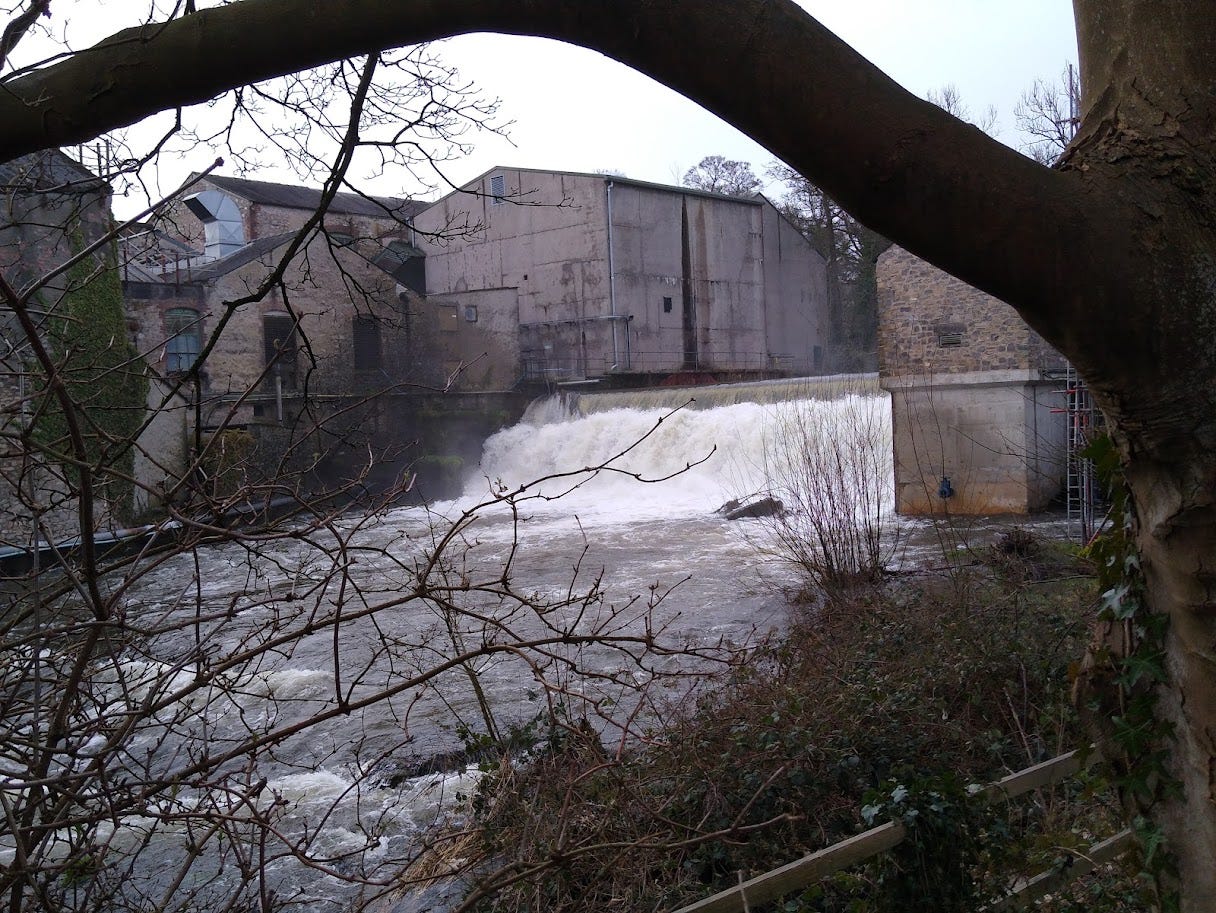
Then the miller uses the power of ingenuity to divert the water into the mill, bringing it under his control.
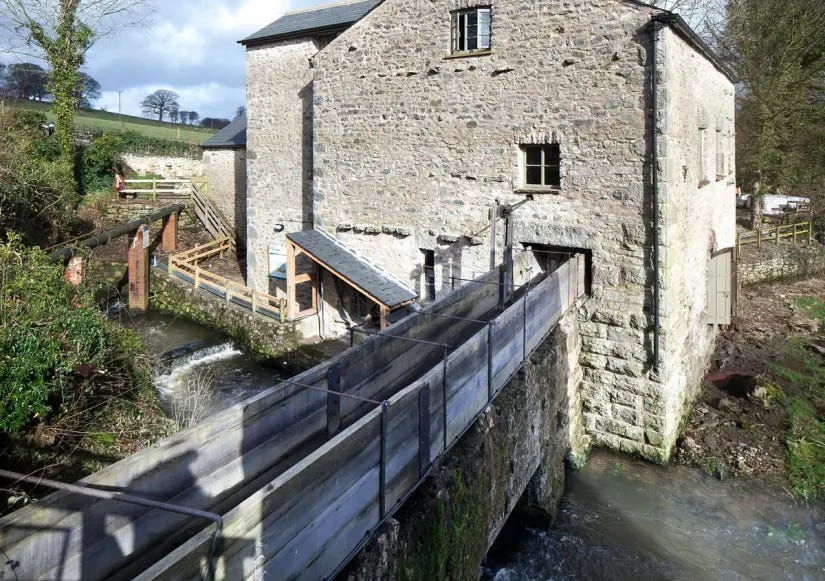
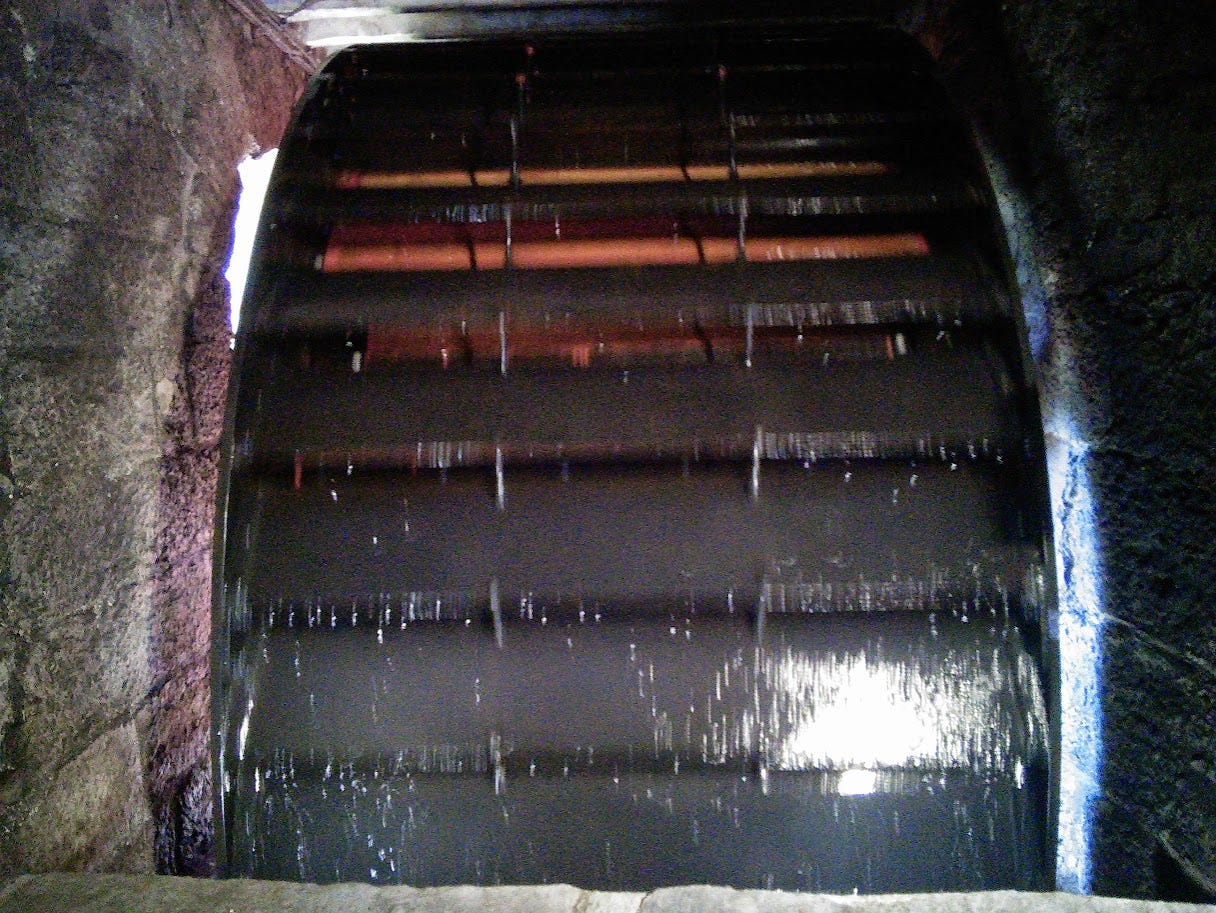
He puts the water to work in an orderly fashion, turning the wheel at a speed to suit his cunning plan.
A stroke of genius - the use of gears - converts the slow rotation of the water wheel round its horizontal axle (bottom left in the picture below) into the much faster rotation of the upright main shaft (the green “tree” in the picture).
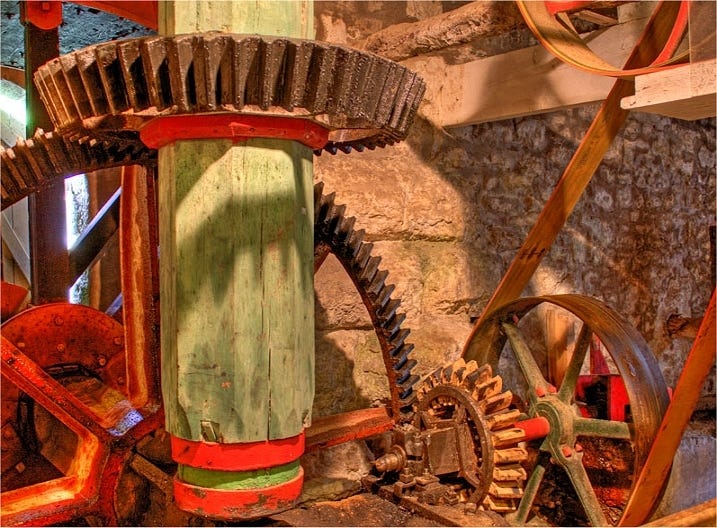
If you have 20 minutes to spare, you can watch the process of turning an actual tree into the main shaft for a mill here. It’s really fascinating! The last five minutes or so are especially interesting, as they show how the gudgeon is wedged onto the end of the shaft, and the burning hot metal hoops (just like the red ones at the bottom of our mill shaft in the picture above) are fixed round the outside and then cooled with water. (See my earlier blog post called “Please mister, can you fix my gudgeon?” if you want to know how Stuart and Steve set about repairing the end of the main axle at the Heron Corn Mill.)
And another stroke of genius - the use of belts - passes the power around the mill from one wheel to another, up a floor, down a floor, across the room - any way you like.
I like to think that somebody long ago used a belt to get a wheel turning in a mill somewhere, and then realised it was turning the wrong way. How could they make it turn in the opposite direction? Imagine the lightbulb moment when they realised that if you put a twist in the belt, the wheel turns “backwards”. If that sounds confusing, this 90 second video shows a lot of different tricks with wheels and belts.
As you walk round the mill, you will see belts all over the place, taking power from the water wheel all round the building.
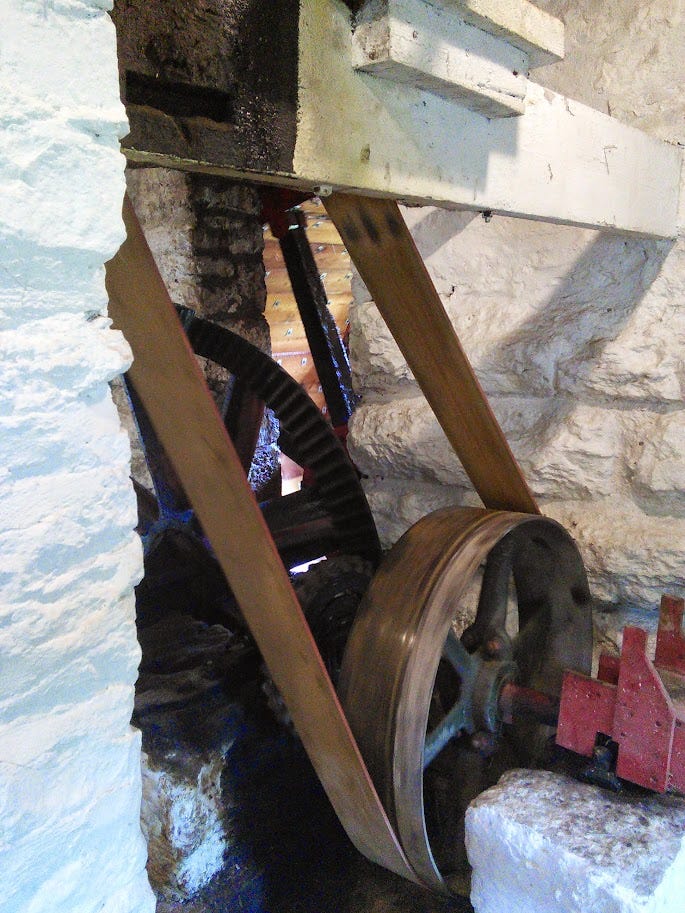
You may remember in an earlier blog post (“Gayle Mill, Hawes”) I talked about “running fast and loose”. The miller could “put a wheel into neutral” by moving the belt from a larger to a slightly smaller wheel, thus reducing the tension in the belt and stopping it gripping tightly enough to turn the wheel. That useful feature at Gayle Mill highlights a general problem with belts: over time, belts stretch and get loose. When that happens, or preferably a little before, the miller needs to do something about it!
Our two strapping lads - Stuart and Steve - have to inspect all the belts in the mill and where necessary tighten them up or replace them. They must be glad they aren’t working at a mill like this one -
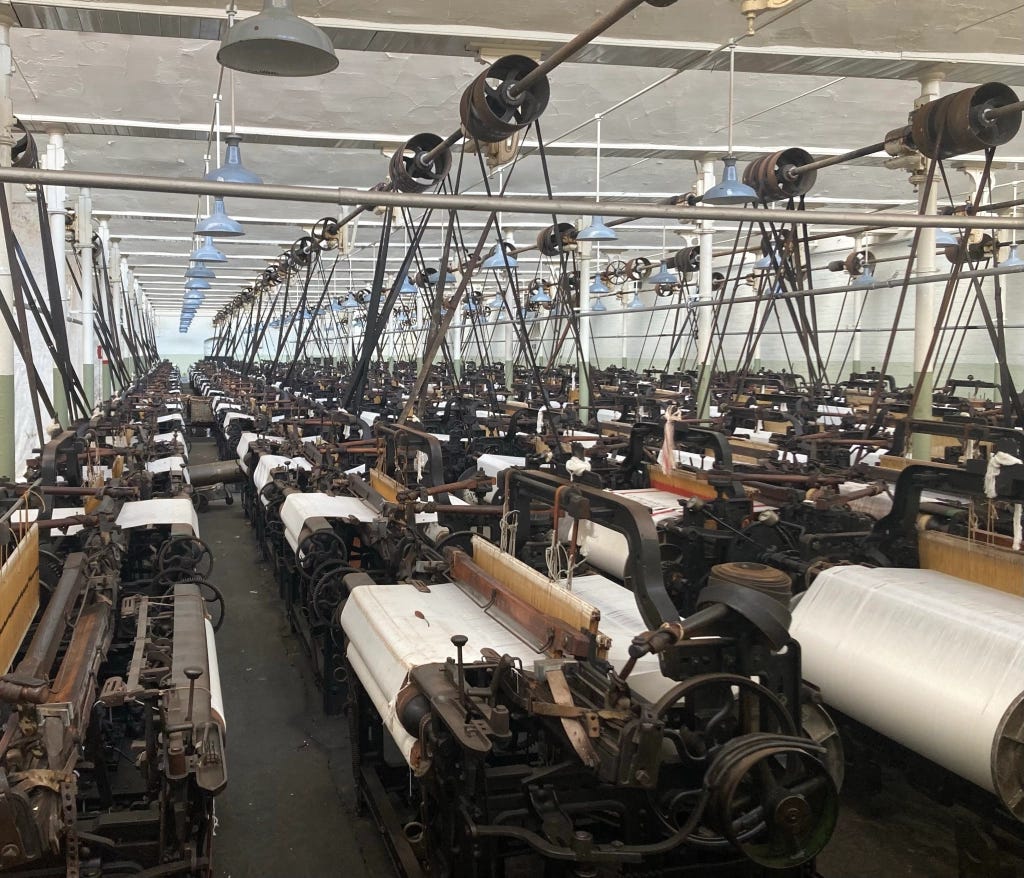
Just imagine the noise in there!
The belts are traditionally made from lengths of leather or fabric. The ends are fastened together to make a loop. You have to be very accurate with the length: too short and the belt won’t fit round the wheels, too long and there won’t be enough tension to grip the wheels properly. Even a perfectly made belt will stretch over time, lose tension and start to slip. Regular maintenance is needed to shorten the belt slightly and restore the original tension.
Joining the ends of the belt to make a loop is not a trivial job in itself! Each end has a bracket attached, with a line of hoops on. There are special machines for pinching the hoops onto the material. The details may differ, but the idea is the same. You line the belt and the hooks up on the machine, and them squeeze them together using brute force. This is the machine, with two arms at the top to do the squeezing with.
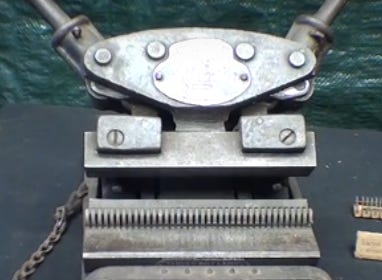
First you lay the hooks onto the machine -
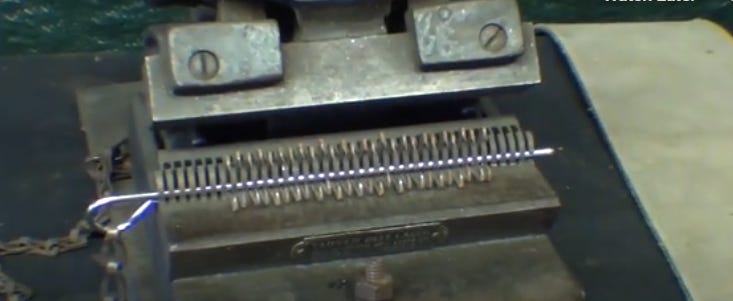
Then you line up the end of the belt with the hooks and bring the arms of the machine down like the arms of a corkscrew.
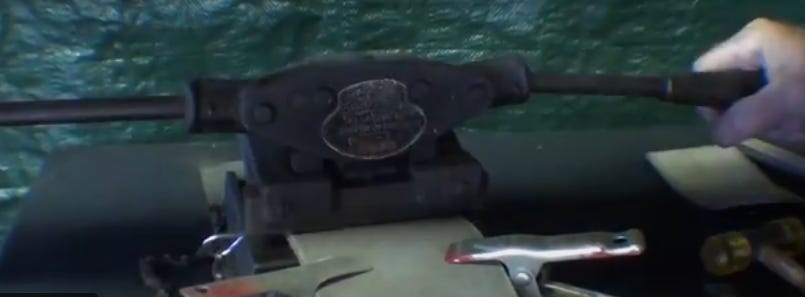
And hey presto! You just squeezed a row of hooks onto the end of your belt!
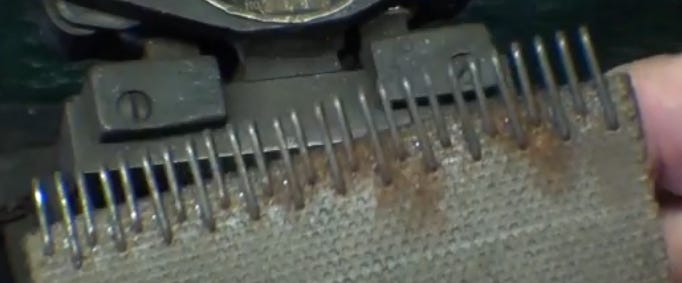
Next the two ends of the belt are lined up with the hoops of one end in between the hoops of the other end. Imagine interlocking your fingers as if you were playing “here’s the church and here’s the steeple”.
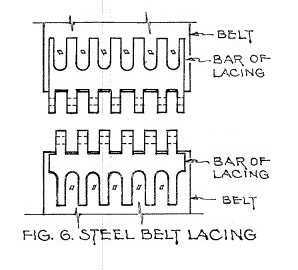
Then a pin is slotted in from the side, through all the hoops, to fasten the ends to each other.
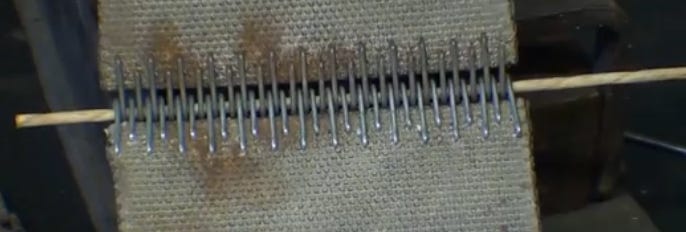
And then repeat for every belt in the mill!
Try watching any of the belts in the Heron Corn Mill, and see how long it is until the joint in the belt comes round. After a while it can get hypnotic!
And if you want to know any more about the belts in the mill, and the skills needed to maintain them in working order, Stuart or Steve would be happy to tell you about it - just ask next time you visit the Heron Corn Mill!
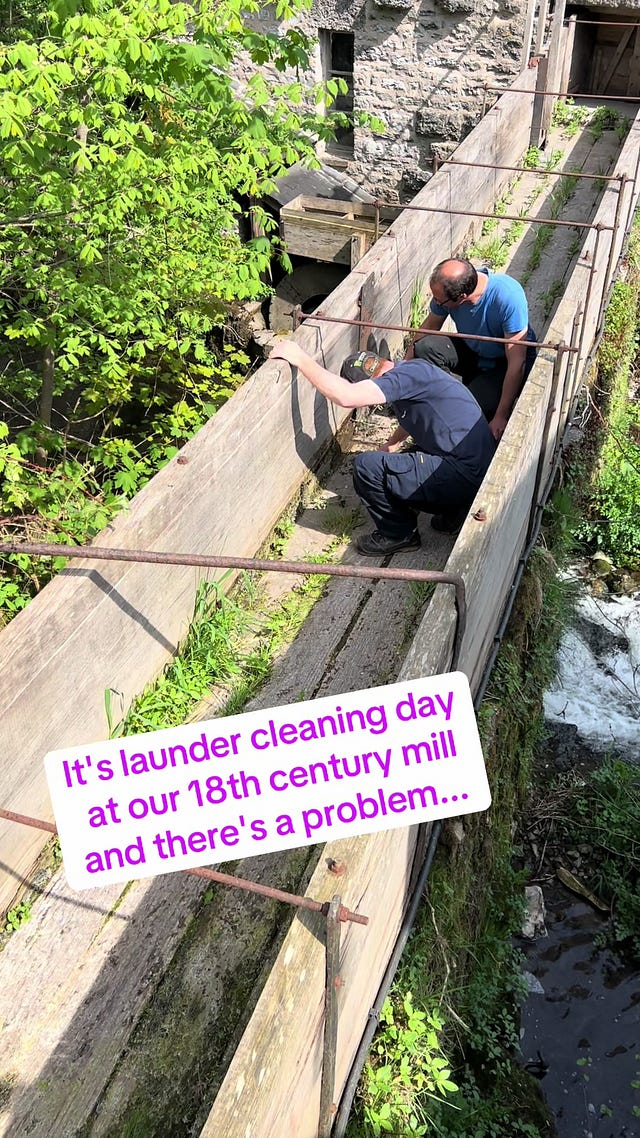
Finally, a footnote about an earlier post. Here’s a short video about the work on the launder, and why it is getting urgent. It’s quite dramatic when you see how far into the rotting wood Stuart’s knife goes!
 Tiktok failed to load.
Enable 3rd party cookies or use another browser